






The Science
LED Light Wavelengths Explained: Red, Blue and Near-Infrared
Blue, red, near-infrared: the number in nanometres isn't jargon. It's the whole point.
If you've shopped for an LED device, you've seen the numbers: 460nm, 660nm, 850nm, 1072nm. They aren't marketing decoration, because the wavelength decides how deep the light travels and what it can do once it gets there. Here's a plain-language map so you can match the light to your skin.
Why wavelength is everything
Light behaves differently at different wavelengths. Shorter wavelengths (blue) scatter in the surface layers, while longer wavelengths (red and near-infrared) travel deeper. Because each layer of skin has a different job (bacteria live near the surface, collagen sits deeper), the wavelength you use determines the concern you can address. Clinical LED research pairs wavelengths to targets for exactly this reason (Lee et al., 2007).
A wavelength isn't a "setting." It's an address that tells the light exactly how deep to go.
Blue: around 415-460nm
The shortest, shallowest wavelength in most masks. Blue light is absorbed near the surface, where it targets the porphyrins inside acne-causing bacteria, producing a bactericidal effect. A study of 415nm blue light reported meaningful improvement in inflammatory acne (Tremblay et al., 2006). Best for: breakouts and blemish-prone skin.
Red: 630-660nm
Visible red sits in the upper-to-mid skin. It's the "glow" wavelength, associated with brighter, more even tone and surface collagen support through the mitochondrial energy mechanism. Best for: dullness, fine lines, and overall radiance.
Near-infrared: 830-850nm
Invisible and deeper-reaching, near-infrared is where the structural work happens: firmness, elasticity, and support for the deeper collagen network. Studies pairing 830nm with 633nm reported improvements in wrinkles and elasticity (Lee et al., 2007). Best for: firmness and deeper signs of aging.
1072nm: deep near-infrared
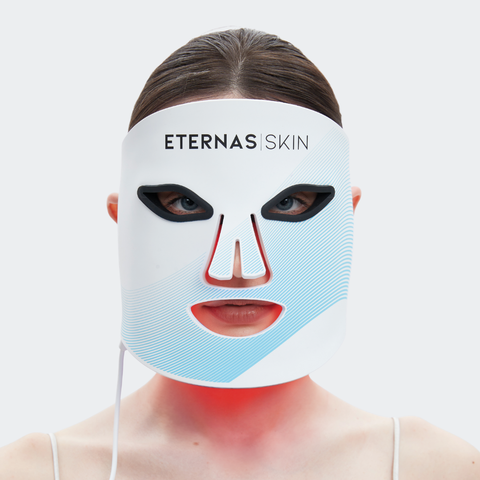
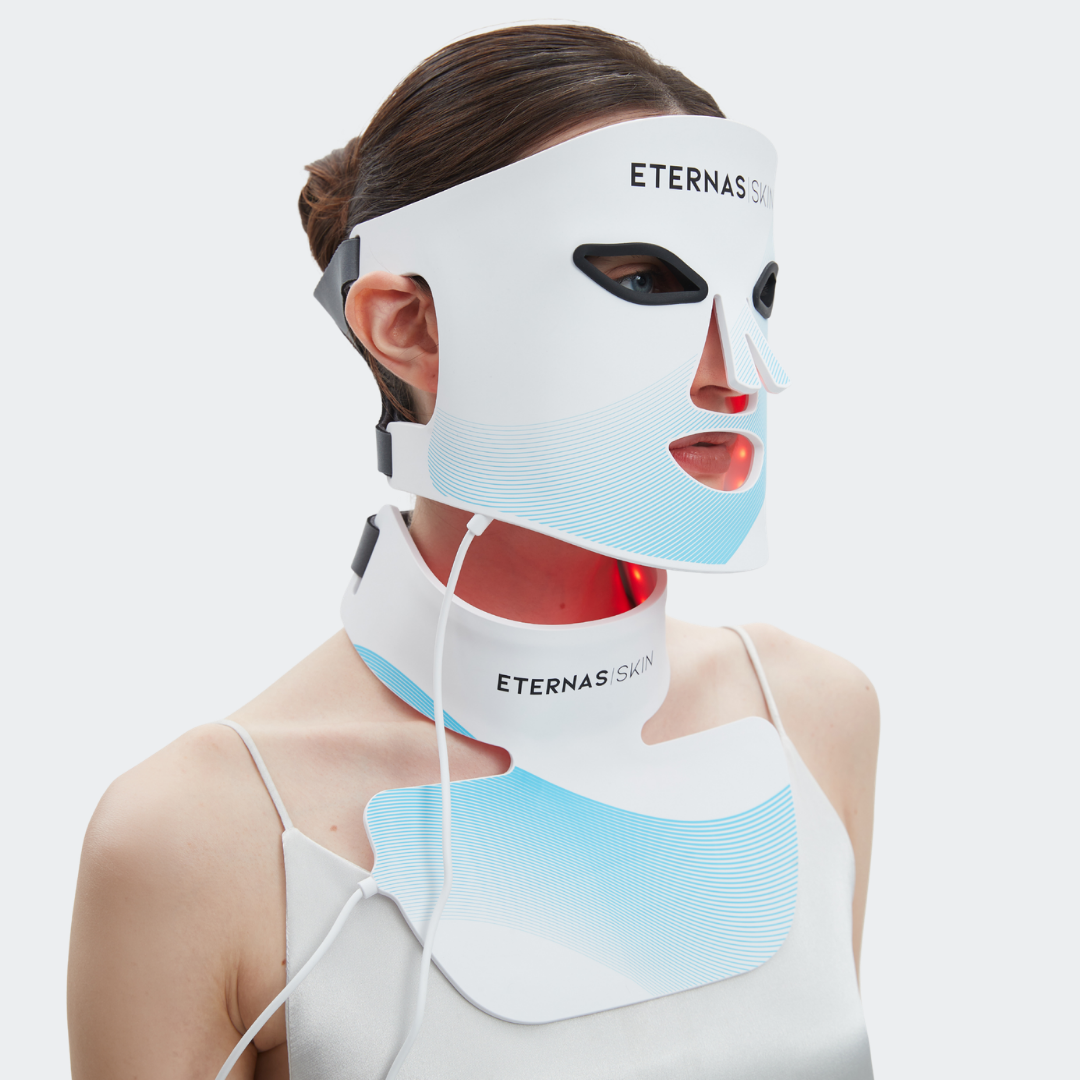
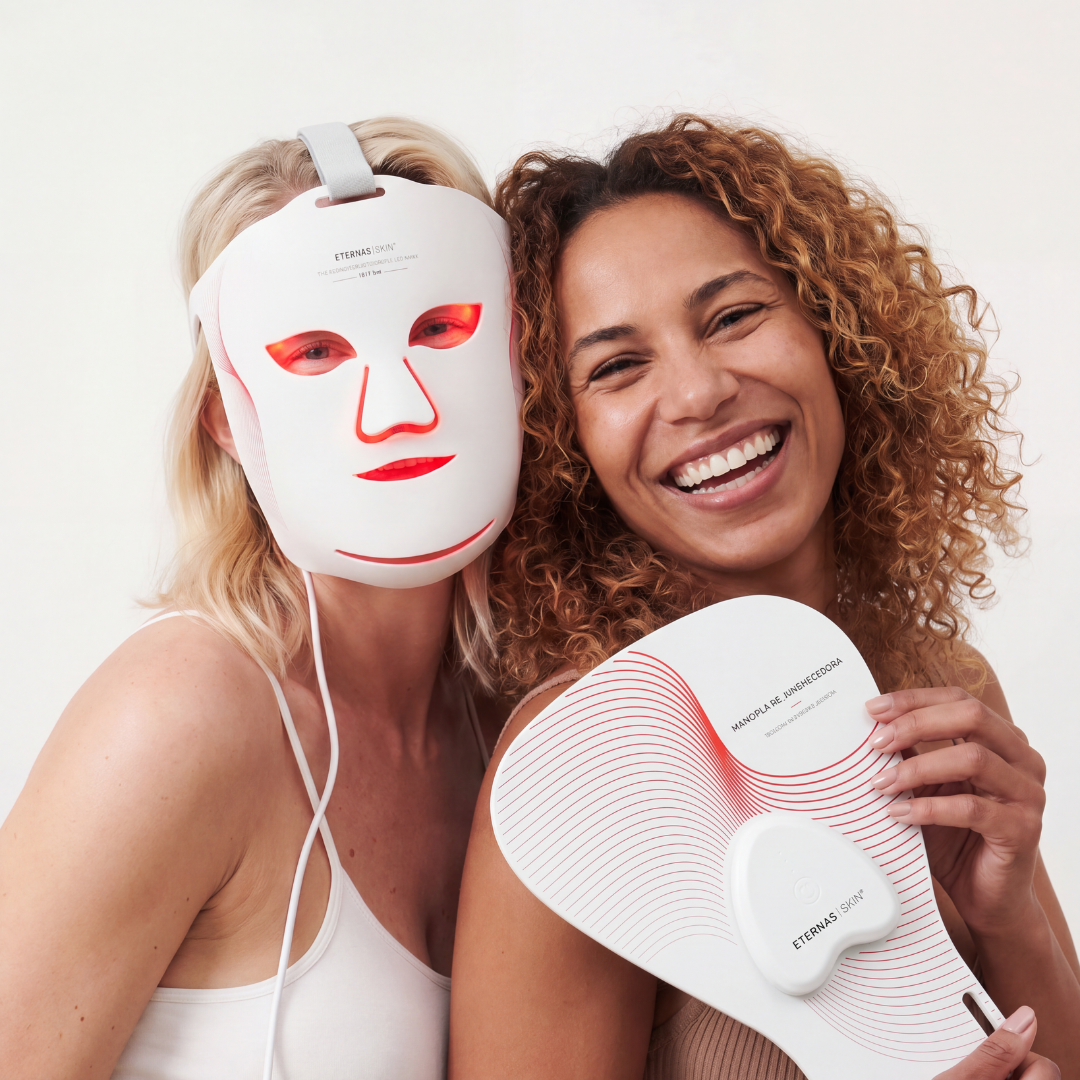
A longer near-infrared wavelength designed to reach the deepest layers LED can practically influence. It's the wavelength behind Eternas' most powerful mask, aimed at more intensive, advanced support. Best for: those who want the most demanding at-home LED step.
So which do you actually need?
Most people don't need to pick just one, which is the logic behind multi-wavelength masks that combine red and near-infrared (and often blue). If you're targeting a single concern, match the wavelength to it. If you want all-round support, a combination device does the work in one session.
Not sure which combination fits your skin? Explore the full range and match the wavelengths to your concern.
Frequently asked questions
Can more than one wavelength be used at once?
Yes. Multi-wavelength devices combine them, which is how most clinical protocols are structured.
Is a higher nm always better?
No. A higher number just means deeper penetration, so the right wavelength depends on your concern, not on the biggest figure.
What wavelength is best for anti-aging?
A red (630-660nm) plus near-infrared (830-850nm) combination is the most studied pairing for firmness and lines.
Does blue light help with anything besides acne?
Its best-supported use is targeting acne-causing bacteria near the skin's surface.
See the full range of wavelengths
From blue for blemishes to 1072nm for deep support, explore the devices and match them to your concern.
Explore all devices