






The Science
Does Red Light Therapy Actually Work? The Science Behind LED Skincare
It moved from dermatology clinics to bathroom shelves in under a decade. Here's what the research really says, and what it doesn't.
Red light therapy has become one of the most talked-about tools in skincare, but between the glowing before-and-afters and the skeptics, it's hard to know what's marketing and what's mechanism. The good news is that red light, or photobiomodulation, is one of the more studied technologies in aesthetic dermatology. Here's an honest look at how it works, what the clinical literature shows, and how to actually use it at home.
What red light therapy actually is
Red light therapy, known in the research as photobiomodulation (PBM) or low-level light therapy, uses specific wavelengths of visible red and near-infrared light to influence how skin cells behave. It's non-thermal and non-invasive: there's no burning, no needles, no downtime.
The leading explanation for why it works sits inside your cells. Red and near-infrared light are absorbed by an enzyme in the mitochondria called cytochrome c oxidase. That absorption nudges the mitochondria to produce more ATP, the energy currency cells run on. With more available energy, skin cells (especially the collagen-producing fibroblasts) can do their job more efficiently, and that is where the visible benefits come from.
Light doesn't "fill in" a wrinkle. It gives your skin's own cells more energy to rebuild, which is why results are gradual, not instant.
What the research shows
Several controlled studies have looked at LED light for skin rejuvenation. A frequently cited 2007 split-face trial by Lee and colleagues treated facial wrinkles with 830nm and 633nm LEDs and reported measurable improvements in wrinkles and elasticity, alongside histological evidence of increased collagen in the treated skin (Lee et al., 2007).
An earlier study by Russell and colleagues found that combined 633nm and 830nm therapy improved periorbital (around-the-eye) wrinkles in most participants (Russell et al., 2005). Barolet's 2009 split-face work using a pulsed 660nm source showed reduced wrinkle depth with histologically confirmed collagen changes on the treated side, and a larger 2014 controlled trial by Wunsch and Matuschka (n=136) measured a significant increase in intradermal collagen density after a course of red-light sessions.
Two honest caveats are worth keeping in mind: most of these studies used professional or research-grade devices, and results built up over weeks of consistent sessions rather than overnight. At-home devices deliver less power than a clinic panel, so consistency matters even more.
Red vs. near-infrared: why wavelength matters
Not all "red light" is the same. Wavelength determines how deep the light reaches:
630-660nm: visible red
Sits in the upper layers of the skin, where it's associated with a brighter, more even, more "awake" look and surface collagen support.
830-850nm: near-infrared
Invisible to the eye, it reaches deeper, where the structural work of firmness and elasticity happens. Many effective protocols combine both, which is exactly why research so often pairs a red and a near-infrared wavelength.
How to use it at home
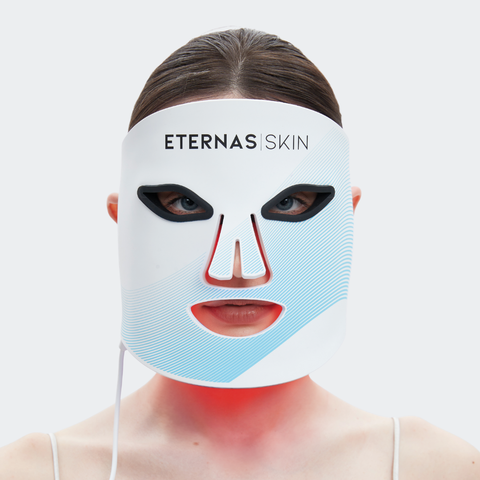
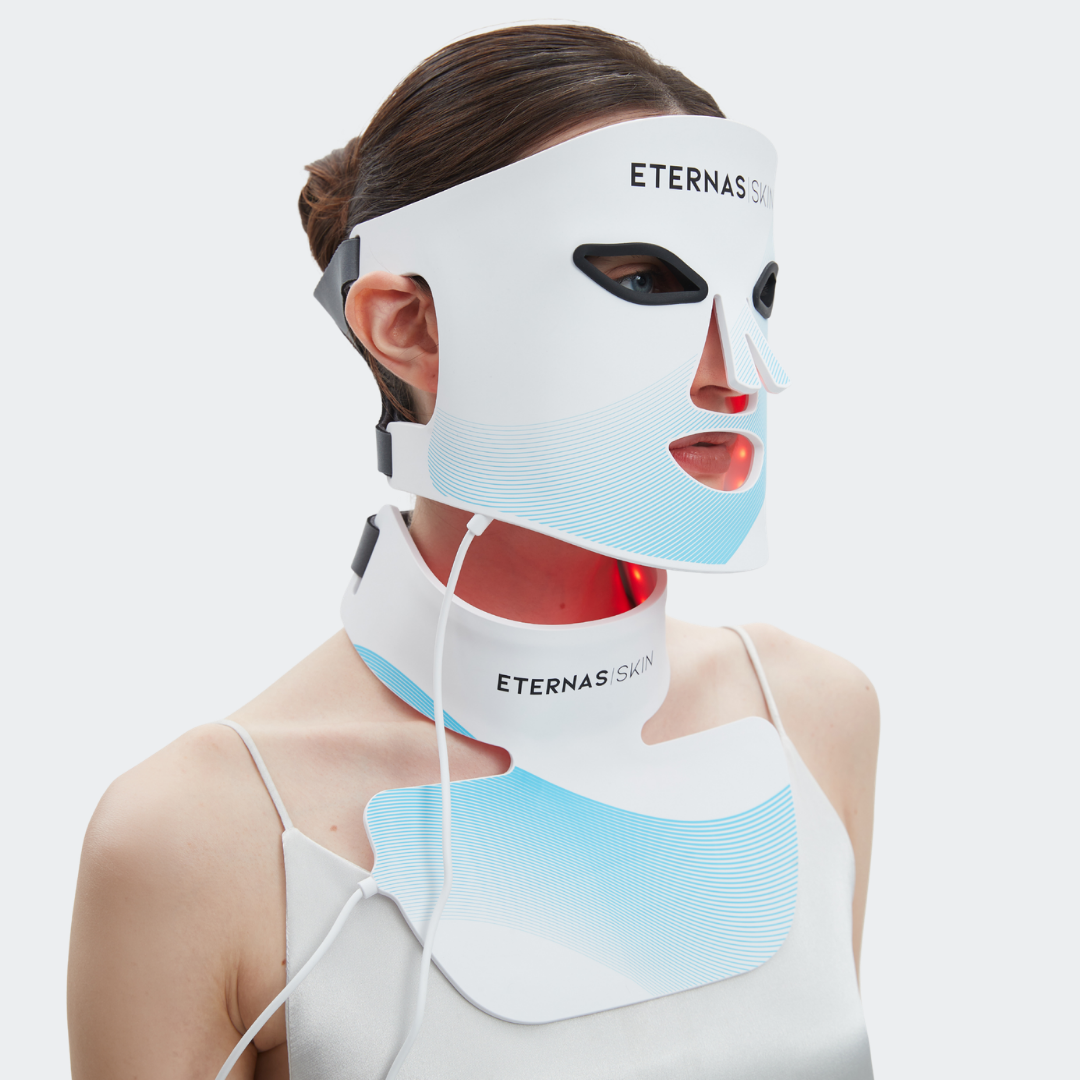
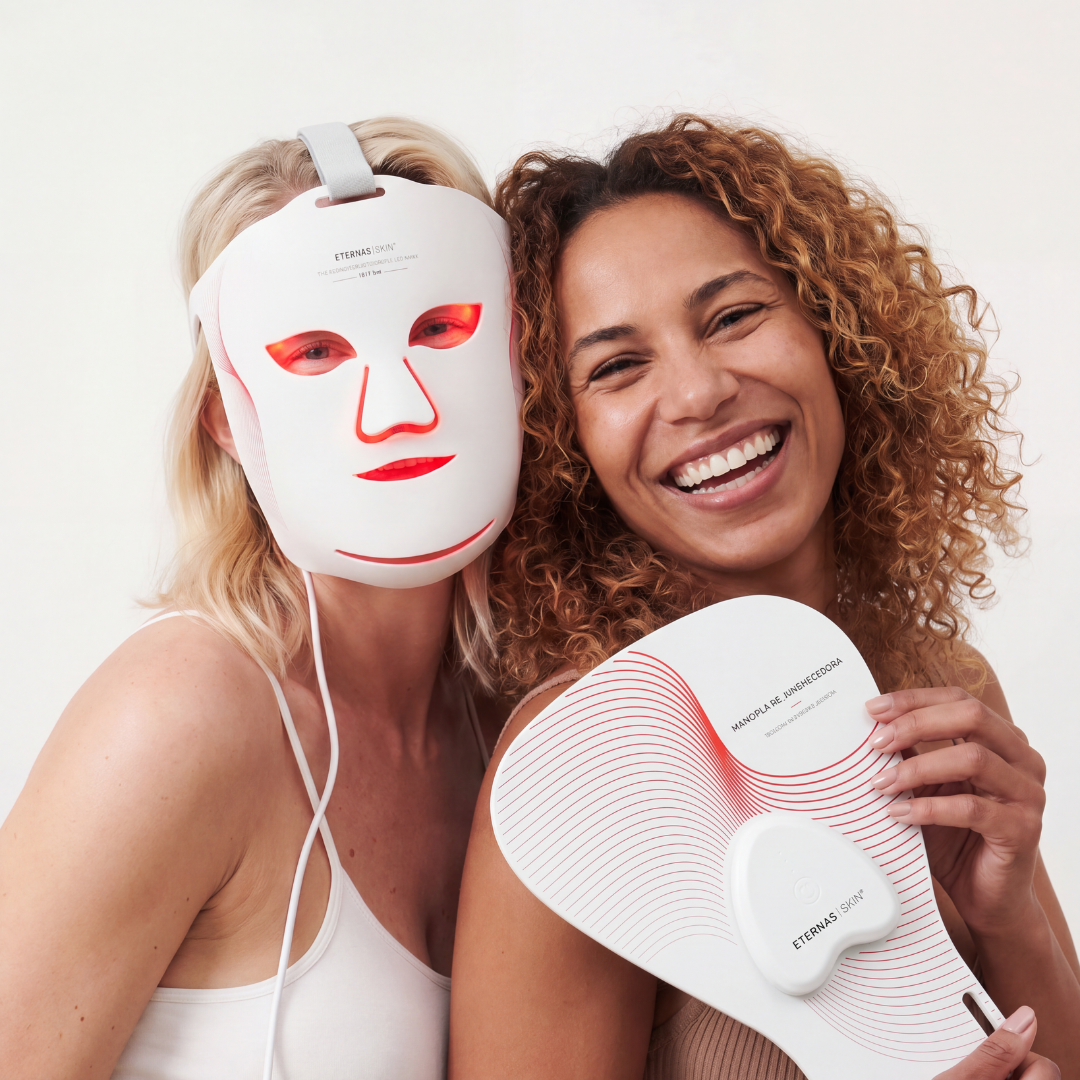
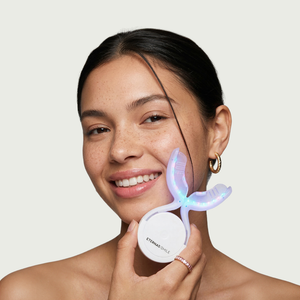
The at-home version of this science is refreshingly simple. Eternas' Pro LED Mask combines red and near-infrared wavelengths in a hands-free device you wear while you do nothing at all.
The three rules that actually move the needle: keep sessions short and regular (around 10 minutes), use it on clean, bare skin so nothing blocks the light, and give it a full cycle of 4 to 8 weeks before you judge results. Consistency is the real active ingredient.
Is red light therapy safe?
Red and near-infrared LED therapy is non-thermal and has been well tolerated in studies, with side effects generally limited to mild, temporary redness. It doesn't contain UV, so it isn't associated with the sun-related damage UV causes. That said, it's a cosmetic device, not a medical treatment. If you're pregnant, taking photosensitizing medication, or managing a specific skin condition, check with your doctor or dermatologist first.
Frequently asked questions
How long until I see results from red light therapy?
Most studies report visible change after several weeks of consistent use, typically in the 4 to 8 week range. It's cumulative, so daily short sessions beat occasional long ones.
Is red light therapy the same as an infrared sauna or a tanning bed?
No. It uses specific red and near-infrared wavelengths and contains no UV light, unlike tanning beds. It also isn't primarily about heat, unlike a sauna.
Can I use red light therapy with my usual skincare?
Yes. Most people use the device on clean, bare skin, then apply serums and moisturizer afterward to lock in the routine.
Which wavelength is best for wrinkles and firmness?
Research most often pairs a visible red wavelength (around 630-660nm) with a near-infrared one (around 830-850nm) so you get both surface and deeper support, which is how the Pro LED Mask is built.
Ready to try red light at home?
The Pro LED Mask combines 660nm red and 850nm near-infrared in one hands-free device.
Shop the Pro LED Mask- Lee SY, et al. LED phototherapy for skin rejuvenation (830nm & 633nm), split-face RCT. J Photochem Photobiol B, 2007. PubMed
- Russell BA, Kellett N, Reilly LR. Combination LED light therapy (633nm and 830nm) in facial skin rejuvenation. J Cosmet Laser Ther, 2005. PubMed
- Barolet D, et al. Regulation of skin collagen metabolism using a pulsed 660nm LED light source. J Invest Dermatol, 2009.
- Wunsch A, Matuschka K. Efficacy of red and near-infrared light treatment on fine lines, wrinkles, skin roughness, and intradermal collagen density. Photomed Laser Surg, 2014.