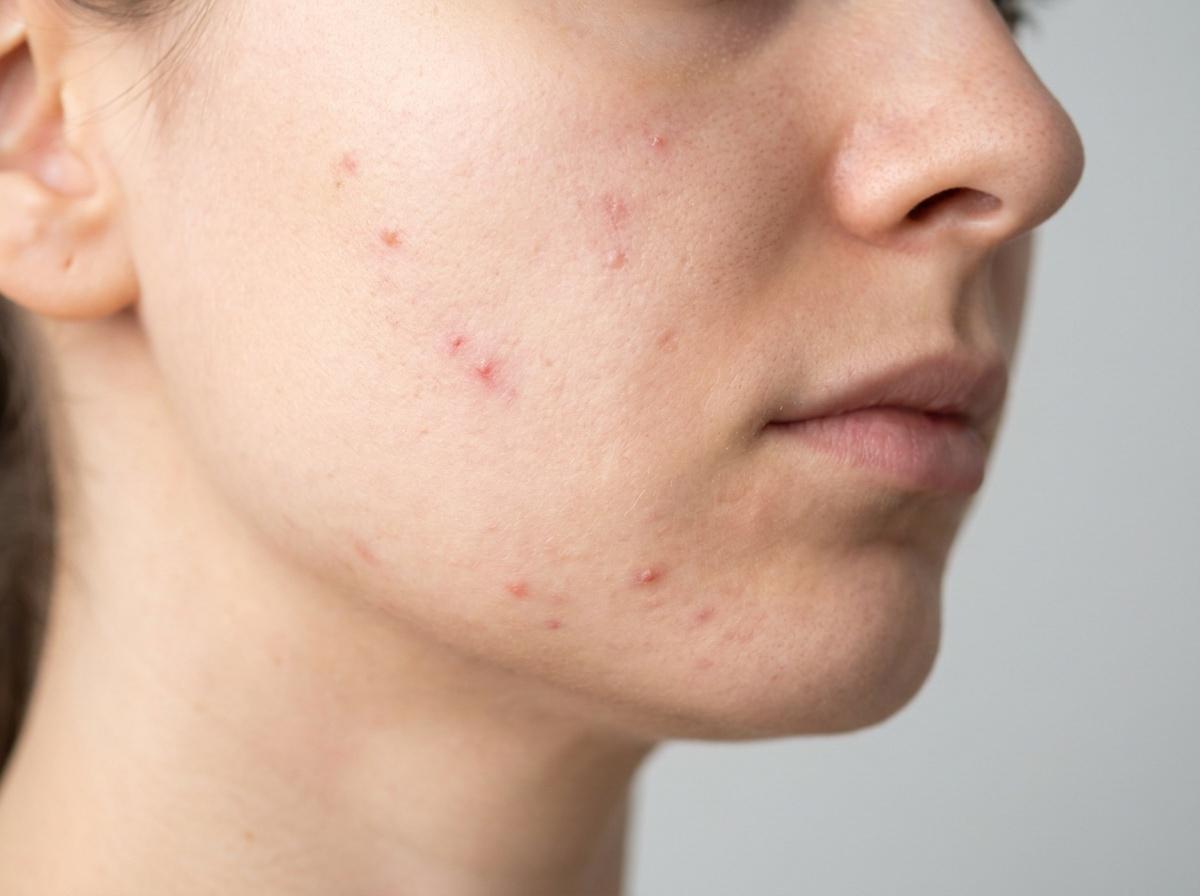
What can be behind redness
Facial redness has many causes: irritation from products, sun exposure, heat, stress, or a condition such as rosacea. That is why it matters not to assume which one it is.
The NHS describes rosacea as a long-term condition that mainly affects the face. It starts with flushing across the nose, cheeks, forehead, chin, neck and chest that comes and goes, sometimes with a warm or painful feeling, and with burning or stinging when you use water or skincare.
How it progresses and what triggers it
Over time the redness can become constant and tiny blood vessels that do not fade may show. Small pink or red bumps can also appear. On brown or black skin the redness can be harder to see.
The cause is not known, but the NHS lists common triggers:
- Alcohol and spicy food.
- Hot drinks.
- Sunlight and extreme temperatures.
- Intense aerobic exercise.
- Stress.

Daily habits that help
The NHS recommends sunscreen of SPF 30 or higher every day, avoiding heat and humidity where possible, covering your face in cold weather, and using gentle products made for sensitive skin. Managing stress and avoiding your triggers also help.
The American Academy of Dermatology (AAD) suggests keeping a daily journal to spot which triggers affect you, because they vary from person to person.
What light can do, and its limits
A review of low-level light therapy records that red and near-infrared light is absorbed by mitochondria in skin. On photoprotection, it says studies on a possible reduction of UV-induced redness are early and limited, and some researchers disagree.
The sources cited here give no evidence that home LED light improves rosacea. In cosmetic terms, a device is not a way to treat it.
The NHS also lists heat among rosacea triggers. So before using any device that produces heat, such as radiofrequency, it makes sense to ask a dermatologist first.
Using a device at home safely
If your redness is occasional and you know the cause, use only gentle devices, on clean skin, for the time the manufacturer gives. If the skin itches, stings or gets redder, stop the session.
If you have diagnosed rosacea, or suspect you may have it, ask your dermatologist before using a device. Do not use one on very irritated skin or on wounds.
When to see a dermatologist
The AAD recommends seeing a board-certified dermatologist to confirm the cause, since rosacea can look like acne, sunburn, eczema or seborrheic dermatitis.
The NHS says to see a GP if you have rosacea symptoms, and to seek urgent advice if you have eye pain, blurred vision, light sensitivity, a red eye or a gritty feeling, because these may point to keratitis.
Realistic expectations
According to the AAD and the NHS, rosacea cannot be cured, although treatment can reduce flare-ups and ease symptoms. The further it progresses, the harder it is to treat, which is why seeing someone early matters.
A gentle routine, sun protection and knowing your triggers are the most useful things you can do at home.
Sources
- NHSRosacea
- American Academy of DermatologyRosacea: Overview
- PubMed Central (Seminars in Cutaneous Medicine and Surgery)Low-level laser (light) therapy (LLLT) in skin: stimulating, healing, restoring
Informational content. It does not replace the advice of a healthcare professional. Images are illustrative, not customer results.